The difference between theft and robbery
In everyday speech they are used interchangeably, but in the Criminal Code they are different offences with very different penalties:
- Theft (hurto, article 234): taking someone else’s movable property for gain, without the owner’s consent, without forcing anything and without violence. Shoplifting or pickpocketing are the typical examples.
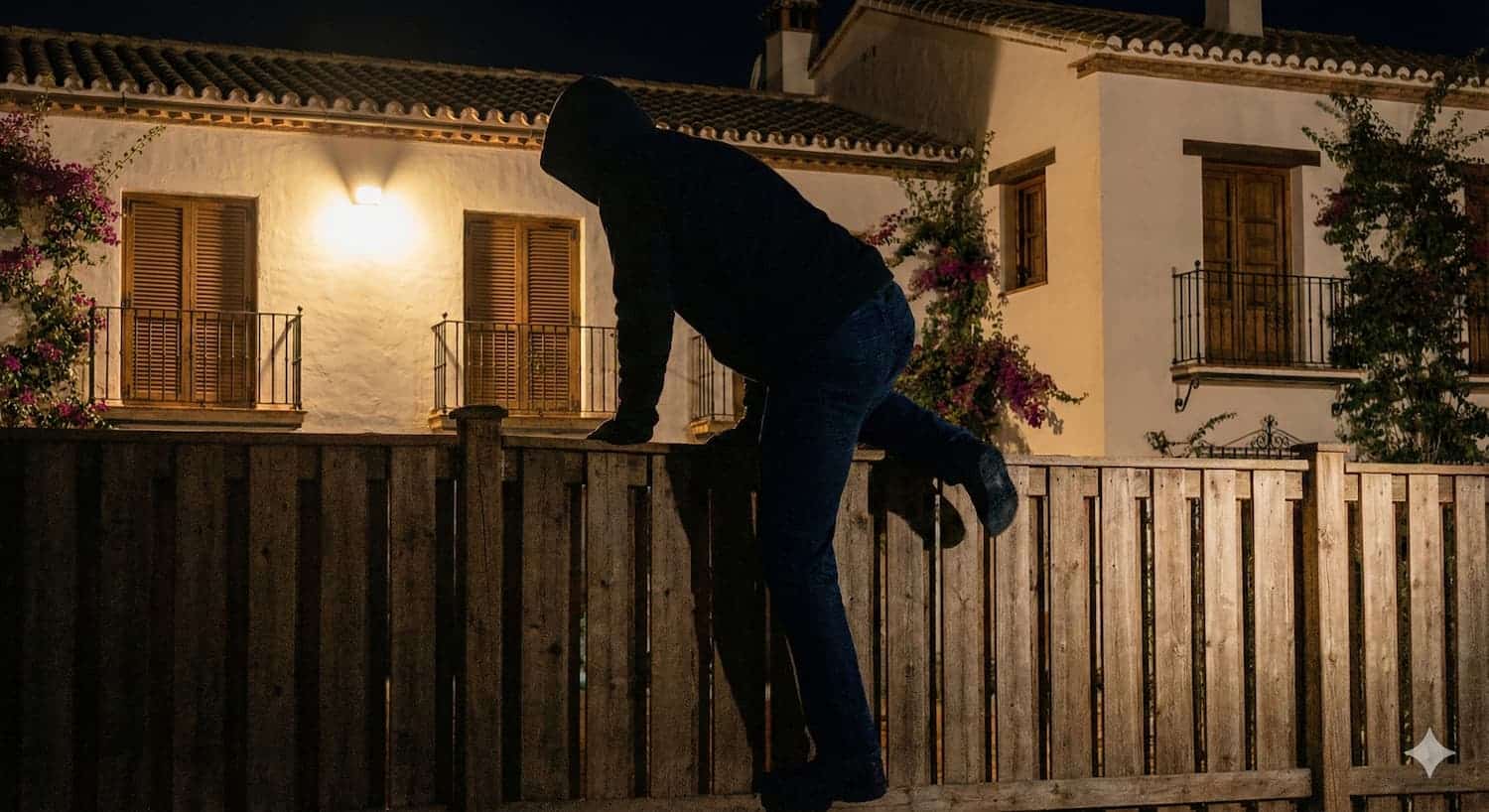
- Robbery with force (robo con fuerza en las cosas, articles 237 and 238): taking something by using force to get into or out of the place: climbing in, breaking a wall, door or window, forcing a cupboard or a lock, using false keys or disabling an alarm. Cards and remote openers also count as keys (article 239). This covers what is known in the UK as burglary.
- Robbery with violence or intimidation (robo con violencia o intimidación, article 237): using violence or threats against people, while committing the act, to escape or against anyone who comes to the victim’s aid.
Whether an act is classified as theft or robbery completely changes the penalty. That is why we check from the very first moment how the police report (atestado) describes what happened.
Penalties for theft
- Value of the property stolen exceeds €400: six to eighteen months in prison (article 234.1).
- Does not exceed €400: a fine of one to three months (minor offence, article 234.2). However, if the person already has at least three final convictions for offences of the same kind, and one of them is minor, the prison sentence in paragraph 1 applies.
- If the alarm or security device on the item stolen is disabled, the penalty is imposed in its upper half (article 234.3).
Aggravated theft (article 235) is punishable by one to three years in prison, among other cases, when mobile phones or other devices containing personal data are stolen (except those on sale in a shop), when the value or the loss is particularly serious, when the victim’s vulnerability is exploited, when children under sixteen are used or when the offender already has at least three convictions for less serious or serious offences of the same kind.
Penalties for robbery
| Situation | Prison sentence | Article |
|---|
| Robbery with force | 1 to 3 years | 240.1 |
| Robbery with force with a circumstance under art. 235 | 2 to 5 years | 240.2 |
| Robbery with force in an inhabited home or premises open to the public | 2 to 5 years | 241.1 |
| In an establishment outside opening hours | 1 to 5 years | 241.1 |
| Robbery with violence or intimidation | 2 to 5 years | 242.1 |
| With violence in an inhabited home or premises open to the public | 3 years and 6 months to 5 years | 242.2 |
With weapons or other dangerous means, the penalty is imposed in its upper half (article 242.3). Conversely, if the violence or intimidation was of a lesser degree, the judge may reduce the penalty by one degree (article 242.4), which we always request when the facts allow. Any place used as a dwelling counts as an inhabited home, even if its occupants are away at the time of the robbery (article 241.2).
Taking vehicles and other situations
Taking someone else’s car or motorbike without intending to keep it and returning it within 48 hours is punishable by 31 to 90 days of community service or a fine of two to twelve months (article 244). If it is not returned within that period, it is tried as theft or robbery. Anyone who buys or receives items knowing they are stolen commits the offence of handling stolen goods (receptación), punishable by six months to two years in prison (article 298). Extortion, forcing someone through violence or intimidation into a transaction to their detriment, carries a penalty of one to five years (article 243).
Speedy trial and plea agreements
Theft, robbery and the unauthorised taking of vehicles are on the list of offences dealt with by speedy trial (juicio rápido) when there is a police report and the person has been arrested or summoned before the duty court (article 795 of the Criminal Procedure Act, Ley de Enjuiciamiento Criminal). In that situation a plea agreement (conformidad) can be reached at the duty court itself, with a one-third reduction of the sentence sought, if the requirements of article 801 are met. It is not always advisable: accepting means admitting the facts and creates a criminal record. We decide with you after seeing the evidence.
How we defend you
- We assist you at the police station or at the duty court, at any time. More information under 24-hour lawyer for people under arrest.
- We review the identification: recordings, identity parades, fingerprints. Weak identification is common in these offences.
- We challenge the classification: whether there was really force or violence, whether it was an inhabited home, the real value of what was taken (the €400 threshold is decisive).
- We consider returning what was taken or paying compensation before trial, which reduces the sentence (article 21.5).
- We request suspension of the sentence if a conviction allowing it is handed down.
Criminal records and prison
If the sentence imposed does not exceed two years, it is your first offence and you pay the civil liability or undertake to do so, the judge can suspend the sentence (article 80). Previous convictions carry weight: they are used to aggravate theft and robbery and can prevent suspension. Records that have been removed, or should have been, do not count, which is why the first step is sometimes to have old criminal records removed.
Between spouses who are not separated, ascendants, descendants and siblings (and in-laws of the first degree if they live together), property offences without violence, intimidation or abuse of the victim’s vulnerability only give rise to civil liability, not criminal liability (article 268).
If you have been robbed
Report it as soon as possible and provide invoices or valuations of what was taken, because the value determines the penalty and the compensation. If you want to take part in the proceedings, request evidence and claim for your loss, we can act as private prosecutor on your behalf.
Every case is different; after studying yours, we will give you a personalised written quote.