Public order

In short
These are three offences in the same chapter of the Criminal Code (Código Penal), but with very different penalties. Working out which one fits what happened is the first task of the defence.
The offence of atentado is committed by anyone who attacks or assaults an authority, its agents or public officials, or seriously resists them with serious intimidation or violence, while they are carrying out their duties or because of them. The latter means that it is also atentado if the attack takes place off duty but precisely because of the work the victim does. The law always treats attacks on teachers or healthcare workers in the course of their work as atentado.
Article 554 extends the same penalties to attacks on members of the Armed Forces in uniform and on duty, on people coming to the aid of the authorities, on firefighters, healthcare staff or rescue teams responding to an emergency, and on identified private security guards acting in cooperation with and under the command of the police (Fuerzas y Cuerpos de Seguridad).
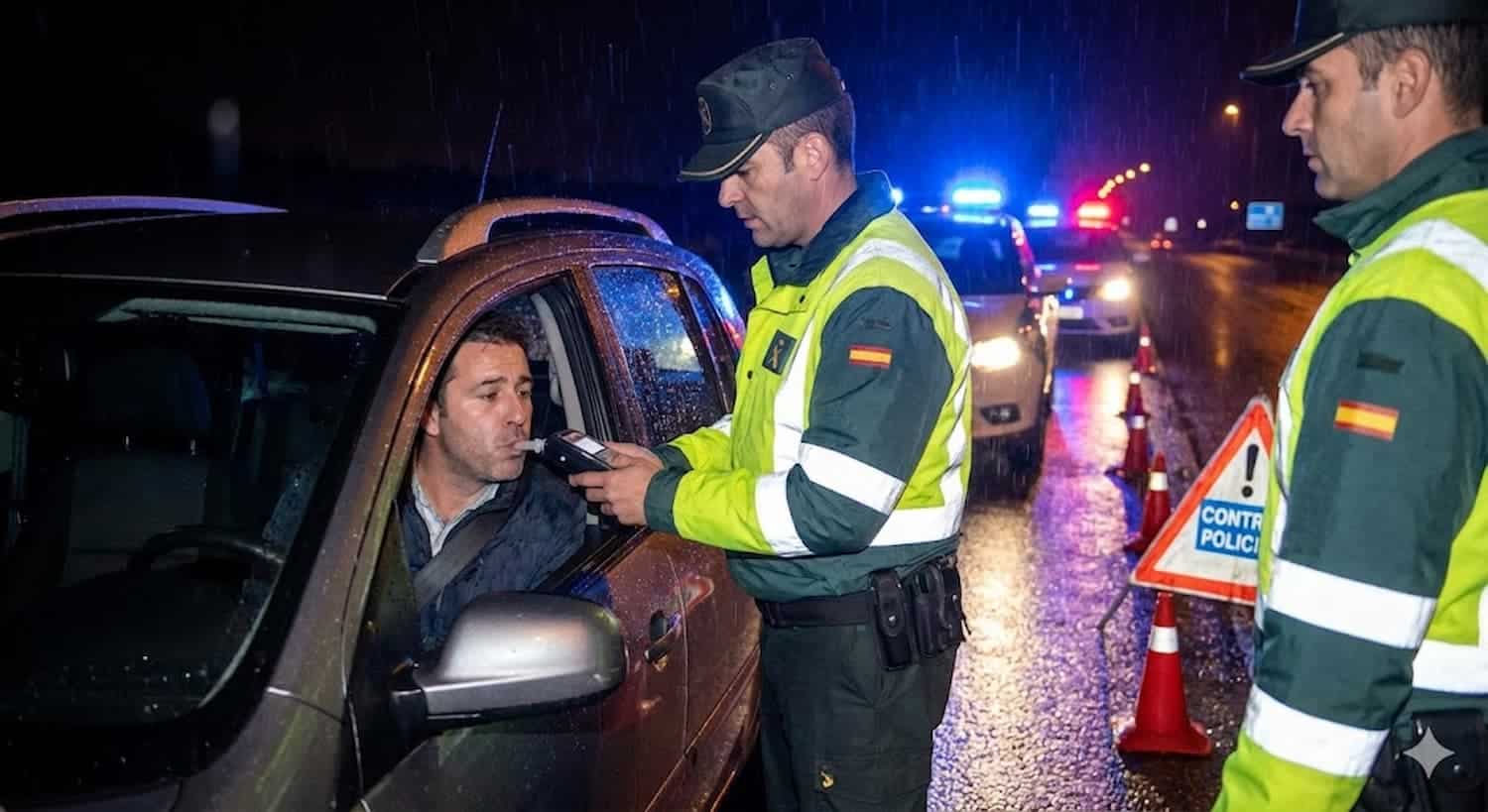
This is the offence committed by someone who, without going as far as atentado, seriously resists or disobeys the authorities or their agents in the course of their duties. For example, struggling to avoid being handcuffed without attacking anyone, or repeatedly and clearly refusing a lawful and direct order.
Failing to show due respect and consideration to an authority in the course of their duties is punished with a fine of one to three months. It is a minor offence (delito leve).
Resistance or disobedience that is not serious is not a crime, although it may lead to an administrative penalty.
| Offence | Penalty |
|---|---|
| Assault on agents of an authority or public officials (art. 550.2) | 6 months to 3 years in prison |
| Assault on an authority (art. 550.2) | 1 to 4 years in prison and a fine of 3 to 6 months |
| Assault on members of the Government, members of parliament, local councils, judges, magistrates or prosecutors, among others (art. 550.3) | 1 to 6 years in prison and a fine of 6 to 12 months |
| Serious resistance or disobedience (art. 556.1) | 3 months to 1 year in prison or a fine of 6 to 18 months |
| Disrespect towards an authority (art. 556.2) | A fine of 1 to 3 months |
For these purposes, police officers and Guardia Civil officers are agents of the authority (agentes de la autoridad). If the officer is also injured, the court can additionally convict for assault causing bodily harm.
Article 551 imposes the penalty one degree higher when the assault is committed:
In these cases there are usually two conflicting versions: yours and the officers’. The police report (atestado) has the legal status of a criminal complaint (art. 297 of the Criminal Procedure Act, Ley de Enjuiciamiento Criminal, LECrim); the officers’ statements must stand up at trial and can be tested against other evidence.
In the first few hours, do three things: do not argue about what happened with the officers, ask to be assisted by the lawyer of your choice and, if you are injured, ask for medical attention and keep the medical report. Also note down the names of witnesses and any places with cameras: recordings are deleted within a few days.
If the events you are accused of did not happen, we can also look at taking action over a false accusation.
If you are arrested on the spot, the case usually goes to the duty court (juzgado de guardia), now the investigating section (Sección de Instrucción) of the Court of First Instance (Tribunal de Instancia), and may be dealt with as a speedy trial because it is an offence caught in the act (art. 795 LECrim). If not, a preliminary investigation is opened and the trial is generally held before the criminal section (Sección de lo Penal) of the Court of First Instance; where the penalty exceeds five years in prison, as with assault on the authorities listed in article 550.3, it goes to the Provincial Court (Audiencia Provincial, art. 14 LECrim). A plea agreement (conformidad) may be offered, which reduces the requested sentence by one third (art. 801 LECrim). Before accepting it, you need to assess whether the evidence supports the charge.
Will I go to prison? If the sentence does not exceed two years and it is your first offence, the judge may suspend it if the requirements of article 80 of the Criminal Code are met. Will I have a criminal record? Yes; it is expunged once the period in article 136 has passed, depending on the sentence imposed, and we can help you with the process.
If you were attacked or seriously intimidated while working at a school, health centre, hospital or any public service, the law treats it as atentado. You can join the proceedings as a private prosecutor (acusación particular) to take part in the case, submit evidence and claim compensation for injuries, after-effects and time off work.
The offence of atentado requires attacking or assaulting the officer, or resisting with serious violence or intimidation (art. 550 of the Criminal Code), and carries up to three years in prison if committed against officers. Serious resistance or disobedience under article 556 does not reach that level of violence and carries three months to one year in prison or a fine.
It can be, if it is considered an attack or assault on an officer carrying out their duties. But it depends on the intensity, the context and the intention. Struggling to break free may fit better with resistance under article 556, which carries a much lower penalty. That is why the legal classification is the first thing we challenge.
The Criminal Code always treats attacks on teachers or healthcare workers in the course of their duties as atentado (art. 550.1). The penalty is six months to three years in prison, and it can be one degree higher if weapons or dangerous objects are used (art. 551). If injuries are also caused, they can be punished separately.
It is only a crime if it amounts to serious disobedience of a lawful and direct order given by an officer in the course of their duties (art. 556 of the Criminal Code). If it is not that serious, it is not a crime, although it may lead to an administrative penalty. Each case depends on how the refusal occurred.
Not automatically. The police report has the status of a criminal complaint (art. 297 LECrim) and the officer’s statement must stand up at trial like any other testimony. Its credibility can be challenged with videos, witnesses, medical reports or contradictions between officers. Gathering that evidence early is key.
Do you need help now?
On this page
Related services