Stages of the proceedings

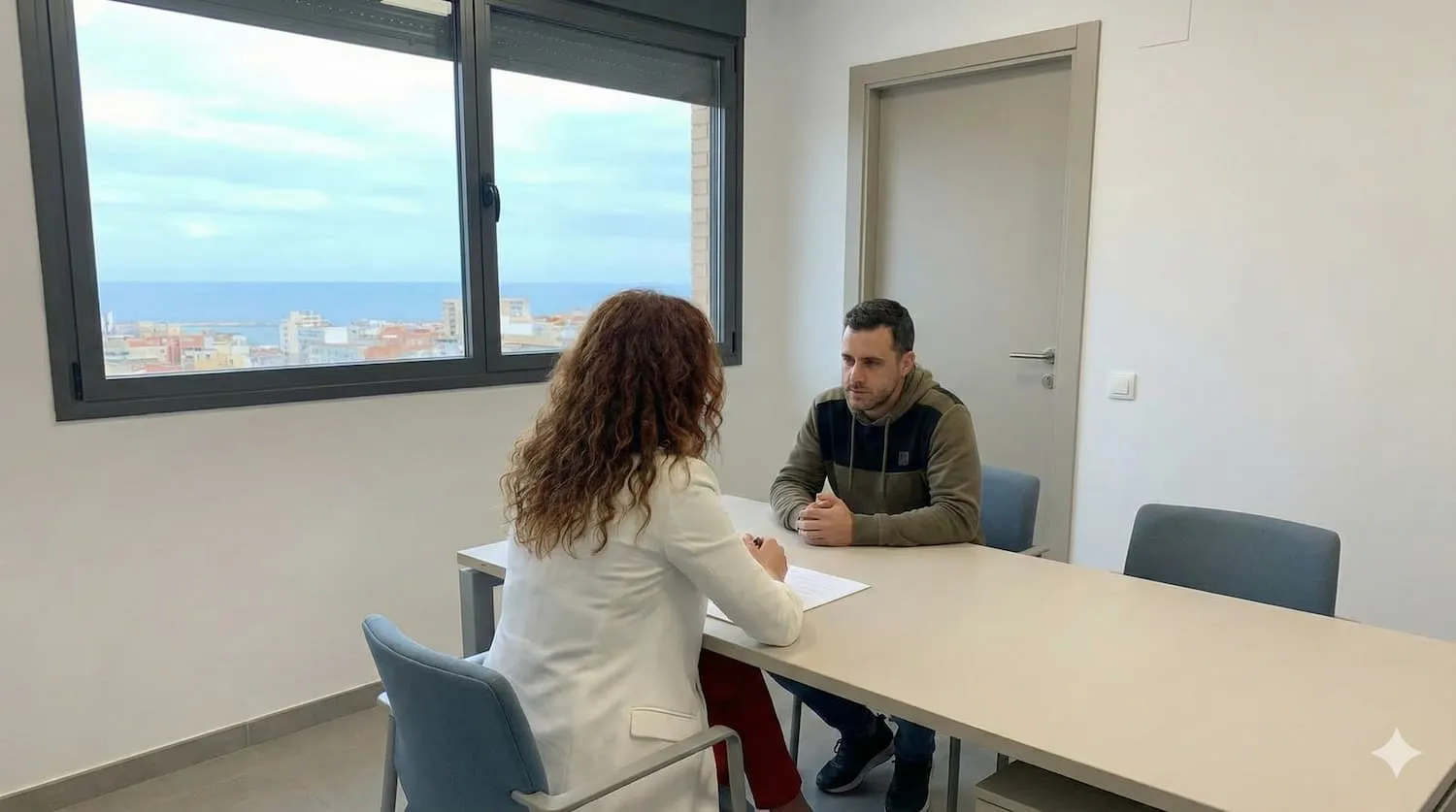
In short
A summons as a suspect (citación como investigado) is a notice from a court calling you to make a statement because, in criminal proceedings, you are alleged to have committed an act that could be an offence. In 2015 the word «investigado» replaced «imputado», precisely to make clear that it does not imply guilt.
The summons normally comes from the Investigating Section of the Court of First Instance (Tribunal de Instancia), formerly the investigating court (juzgado de instrucción), following a complaint, a private criminal action (querella) or a police report. The law requires the person concerned to be informed when a complaint or private criminal action against them has been admitted (Article 118.5 of the Criminal Procedure Act, Ley de Enjuiciamiento Criminal) and provides that the suspect must be summoned only to be heard, unless their arrest is warranted (Article 486).
Being a suspect does not make you guilty and does not give you a criminal record: only a final conviction is entered in the register. You are still protected by the presumption of innocence. But whatever you say in that first statement stays in the case file and may carry weight at trial.
What you should do as soon as you receive the summons:
Article 118 of the Criminal Procedure Act recognises, among others, the following rights:
At the first appearance, the judge informs you of the facts and you may speak privately with your lawyer before and after making your statement (Article 775). You will also be asked for an address in Spain for notifications. Be careful: if you subsequently fail to receive summonses at that address, in some cases the trial may be held in your absence.
A witness is obliged to attend and to tell the truth, under oath or affirmation, and may commit the offence of perjury (falso testimonio) if they lie (Articles 410 and 433). A suspect, by contrast, is not obliged to incriminate themselves and may remain silent.
Sometimes a person is summoned as a witness in a case in which they could end up implicated. If this applies to you, consult us before making a statement: it may be advisable to ask to be summoned as a suspect, with a lawyer.
Most cases are dealt with under the abbreviated procedure (procedimiento abreviado), which applies to offences punishable by up to nine years’ imprisonment (Article 757). The investigation stage is called preliminary proceedings (diligencias previas). During this stage the judge gathers the necessary evidence: statements, expert reports, documents or analysis of devices.
The investigation has a maximum time limit of twelve months from the opening of the case. The judge may order successive extensions of up to six months each, always by a reasoned order and before the time limit expires (Article 324). Keeping track of those time limits is part of the defence.
During this stage the lawyer can propose investigative steps that work in your favour: witnesses, experts, documents or recordings. In corporate offences, the legal entity itself may also be investigated; we explain this on our page on criminal compliance.
We have provided more than 1,200 criminal strategy consultations. This is how we work when you receive a summons:
If the complaint against you is false, as well as defending you, subsequent action may be considered. We deal with this on our page on false accusations.
When the judge considers that the investigation is complete, they issue an order containing one of the following decisions (Article 779):
Many of the judge’s decisions during the investigation can be appealed: an application for reconsideration (recurso de reforma) within three days and an appeal (recurso de apelación) within five (Articles 211 and 766). We explain this on our page on criminal appeals. If you are arrested rather than summoned, see our page on assistance if you are arrested.
If the case concerns gender-based or domestic violence, see our specialist website abogadaviolenciadegenero.com.
If you fail to attend and do not give a legitimate reason, the judge may turn the order to appear into an arrest warrant (Article 487 of the Criminal Procedure Act). If you cannot attend on the date for a justified reason, your lawyer can notify the court and ask for a new date. Never ignore a court summons.
No. A criminal record only results from a final conviction. Being a suspect means that there is an open case in which an act is attributed to you, but it may end in dismissal or acquittal. In the meantime, you are still protected by the presumption of innocence.
Yes. As a suspect you have the right to remain silent, not to make a statement and not to answer certain questions, and this cannot be taken as evidence of guilt (Article 118). You can also answer only your lawyer’s questions. It is a strategic decision best taken after seeing the case file.
The law sets a maximum time limit of twelve months from the opening of the case, which the judge may extend for periods of up to six months by a reasoned order (Article 324 of the Criminal Procedure Act). In practice, the length depends on the complexity of the case and the evidence still to be gathered.
Yes. You have the right to examine the case file sufficiently in advance and, in any event, before your statement is taken (Article 118.1.b). Unless the proceedings have been declared secret, your lawyer can access the complaint, the police report and the rest of the case file to prepare your defence.
Do you need help now?
On this page
Related services