Crimes against persons

In short
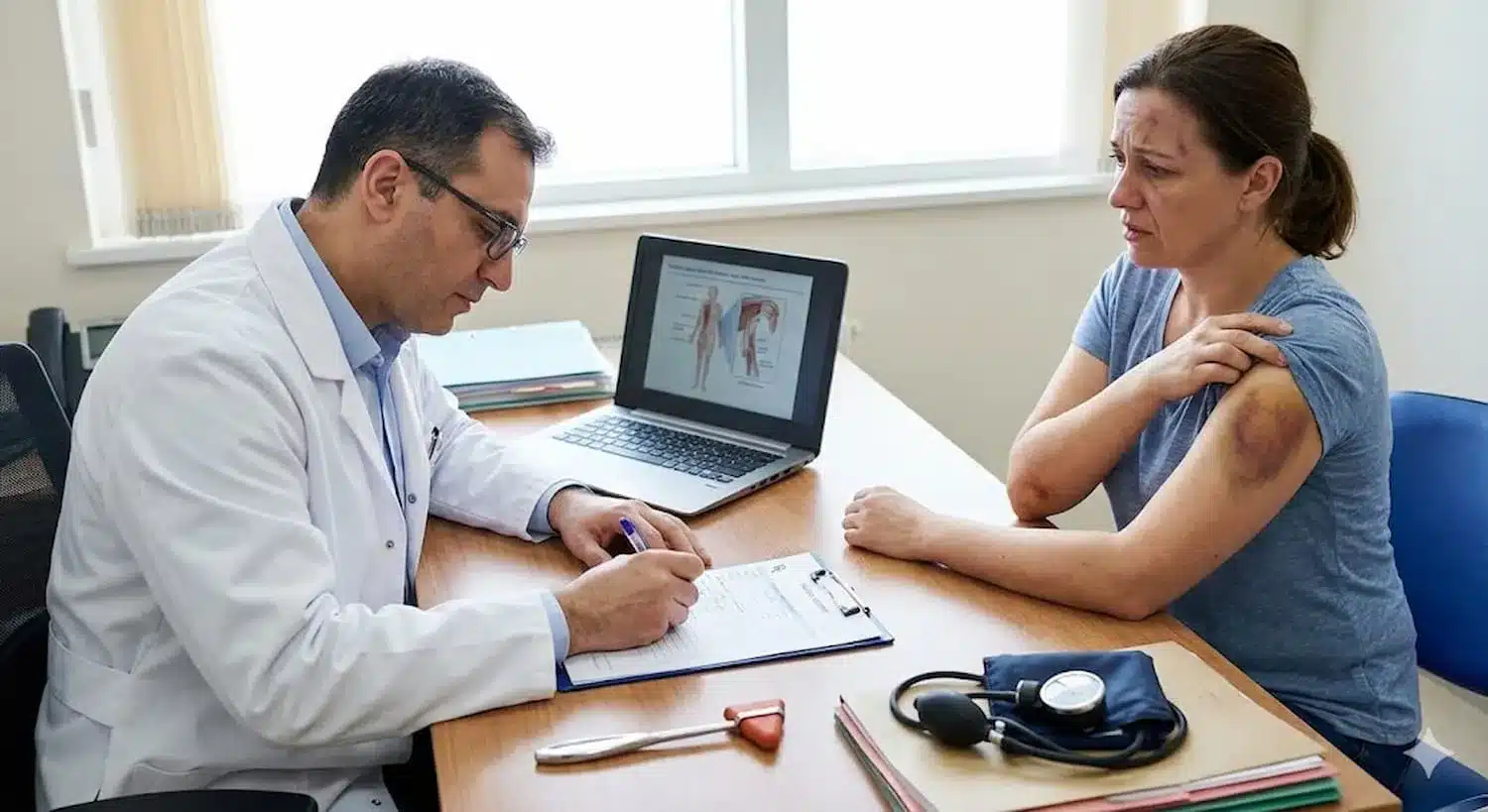
The offence of bodily harm (delito de lesiones) is committed by anyone who, by any means, causes another person harm to their bodily integrity or their physical or mental health (article 147 of the Criminal Code). It is the most common charge after a fight outside a bar, a road-rage argument or an altercation between neighbours.
The key lies in the medical report. If, objectively, the injury requires medical or surgical treatment in addition to initial first aid, it is an offence of bodily harm. If initial first aid is enough, it is a minor offence (delito leve). The law makes clear that mere monitoring or follow-up by a doctor does not count as treatment. That dividing line often decides whether you face a fine or a possible prison sentence.
If the injured person is or has been your partner, the case is governed by the rules on gender-based or domestic violence: in that situation we assist you through our specialist website, abogadaviolenciadegenero.com.
| Situation | Article | Penalty provided |
|---|---|---|
| Injury requiring medical or surgical treatment | 147.1 | Prison from 3 months to 3 years or a fine of 6 to 12 months |
| Minor injury (first aid only) | 147.2 | Fine of 1 to 3 months |
| Blow or assault without injury | 147.3 | Fine of 1 to 2 months |
| Aggravated bodily harm (weapons, cruelty, treachery…) | 148 | Prison from 2 to 5 years |
| Loss of a non-principal organ or limb, or disfigurement | 150 | Prison from 3 to 6 years |
| Loss of a principal organ or limb, of a sense, serious disfigurement or serious illness | 149.1 | Prison from 6 to 12 years |
| Taking part in an affray with dangerous means | 154 | Prison from 3 months to 1 year or a fine of 6 to 24 months |
| Art. 147.1 injury caused by gross negligence | 152.1 | Prison from 3 to 6 months or a fine of 6 to 18 months |
Two important points. The aggravating factors in article 148 are not automatic: the law says the injuries “may” be punished with that penalty, depending on the result or the risk caused, and that leaves room for the defence. And if the injured person gave valid consent, the penalty is reduced by one or two degrees (art. 155).
In addition to the penalty, anyone convicted must compensate the harm caused: days of recovery, lasting effects, medical expenses (art. 116). The judge may also impose a ban on approaching or contacting the victim (art. 57).
In a bodily harm case almost everything is decided in the first few hours and in the medical evidence. This is how we work:
Many fights are dealt with as a speedy trial before the Investigation Section of the Court of First Instance (formerly the investigating court). Decisions are taken within hours, so it is best to arrive with a lawyer who knows the case.
In most art. 147.1 bodily harm cases where there is no previous record, the sentence may end up being a fine or a prison term that is not actually served. The judge can suspend prison sentences of no more than two years (art. 80) if it is your first offence and the compensation is paid, or you undertake to pay it in line with your financial means. During the suspension period you must not reoffend.
A conviction creates a criminal record. If the sentence does not exceed twelve months, it can be removed two years after the sentence is extinguished, provided you do not reoffend (art. 136). We can then help you with removing your criminal record.
If you are the one who has been assaulted, go to a medical centre as soon as possible and ask for an injury report (parte de lesiones). Take photos, keep your clothes and note down the witnesses’ details. Then report it to the police.
You can join the proceedings as a private prosecutor: this allows you to propose evidence, ask for the penalty you consider fair and claim full compensation for days of recovery, lasting effects and expenses. Bear in mind that minor bodily harm offences become time-barred after one year (art. 131), and that in these cases your complaint is essential for the case to go ahead.
It depends on the medical treatment. If the injury requires medical or surgical treatment (stitches, immobilisation, rehabilitation) in addition to first aid, it is an offence of bodily harm under article 147.1 of the Spanish Criminal Code, punishable by prison or a fine. If first aid is enough, it is a minor offence punishable only by a fine of one to three months. The forensic doctor’s report is decisive and can be challenged with an expert report.
If you acted in self-defence, no. Article 20.4 of the Criminal Code requires prior unlawful aggression, that the means you used were reasonably necessary and that you did not provoke the situation. If one of these requirements is missing, it may be treated as a mitigating factor and reduce the sentence. That is why it is so important to keep videos and find witnesses from day one.
It depends on the type. For minor injuries and assault without injury, which are only prosecuted on complaint, the express forgiveness of the injured person before judgment extinguishes liability. For the offence of bodily harm requiring medical treatment, on the other hand, the proceedings are public: even if the victim withdraws the complaint, the public prosecutor can continue the prosecution. A reparation agreement can, however, reduce the sentence.
Normally not, although it depends on how serious it is. If the sentence imposed does not exceed two years in prison, it is your first offence and you pay or undertake to pay the compensation, the judge can suspend the sentence (art. 80 of the Criminal Code). Aggravated or grievous bodily harm carries higher penalties, and there the defence strategy is decisive.
Minor bodily harm offences become time-barred after one year. The offence of bodily harm under article 147.1 becomes time-barred after five years, and more serious injuries after longer periods. Even so, do not wait: the sooner you report it, the easier it is to obtain the medical report, camera footage and witnesses, which are often lost within a few days.
Do you need help now?
On this page
Related services