Road safety

In short
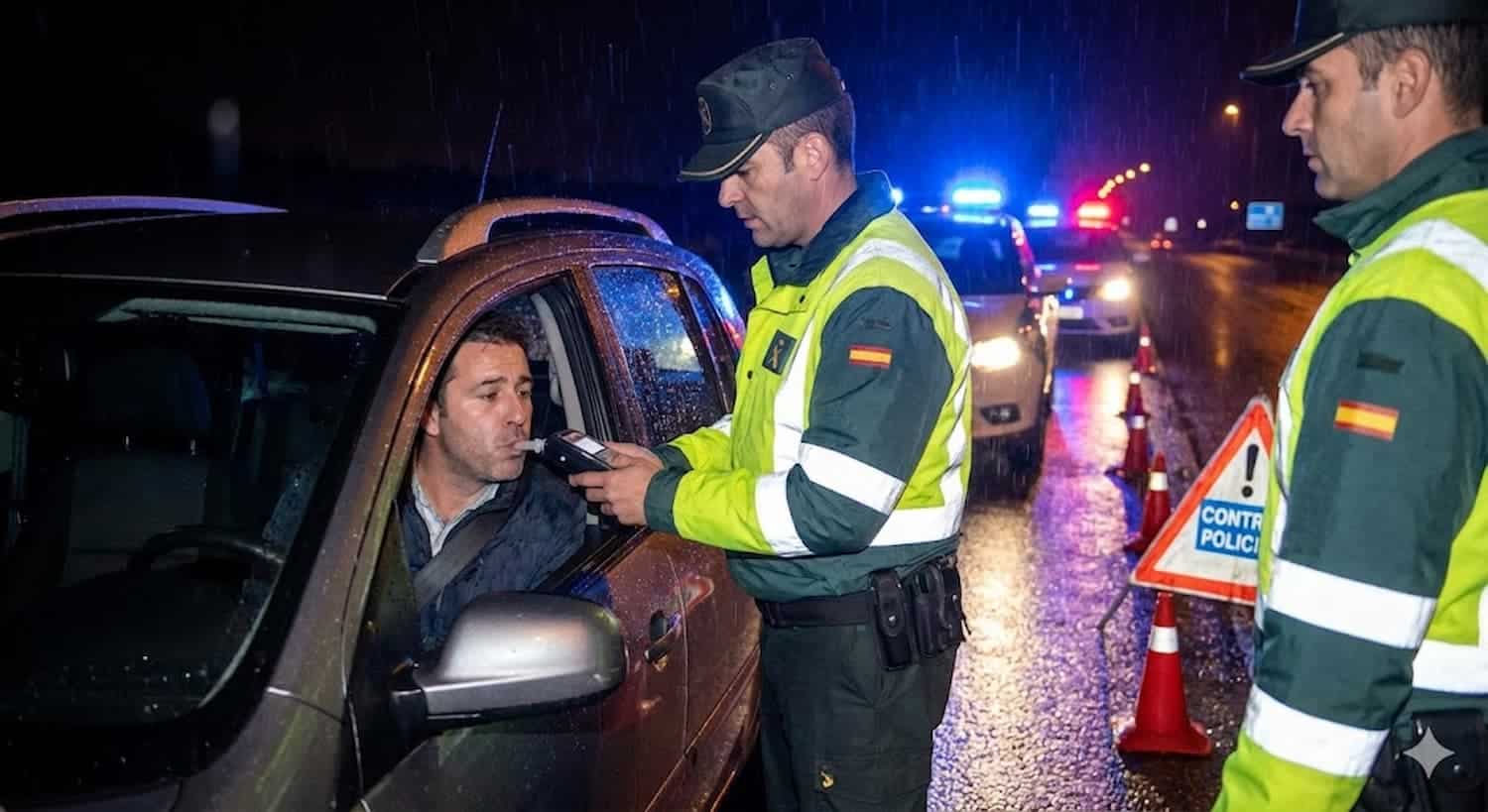
Not every positive breath test is a criminal offence. Article 379.2 of the Criminal Code (Código Penal) punishes two different situations:
If you give a positive reading below 0.60 mg/l and there are no signs that alcohol affected your driving, it will normally be an administrative traffic offence (a fine and penalty points), not a crime. That borderline is exactly where many defences are won or lost.
Paragraph 1 of the same article 379 also punishes serious speeding. If that is your situation, or if you were driving without a licence, we explain it on our page on driving without a licence, speeding and reckless driving.
The penalties in article 379 are alternatives: the judge chooses one of the first three and, in addition, always imposes a driving ban.
| Penalty | Duration |
|---|---|
| Prison | 3 to 6 months |
| or a fine | 6 to 12 months |
| or community service | 31 to 90 days |
| And in every case: disqualification from driving | More than 1 year and up to 4 years |
You should also bear in mind that:
Refusing to blow into the breathalyser or to take a drug test when an officer requires you to is a separate offence (art. 383 of the Criminal Code), even if it is never proved that you had been drinking. The penalty is six months to one year in prison and a driving ban of more than one and up to four years. It is more serious than drink-driving itself, because here there is no option of a fine instead of prison.
For drug testing, the law provides for a preliminary saliva test and, if it is positive or there are signs of drug use, an obligation to provide a saliva sample for analysis at an accredited laboratory with a chain of custody. In addition, you are entitled to request a confirmatory test (a blood or urine test or similar), under article 796 of the Criminal Procedure Act (Ley de Enjuiciamiento Criminal, LECrim).
Road traffic offences are almost always dealt with through a speedy trial (juicio rápido, art. 795 LECrim). The police will summon you to the duty court (juzgado de guardia) – now the investigating section (Sección de Instrucción) of the Court of First Instance (Tribunal de Instancia) on duty – within a few days, sometimes the same day if you have been arrested.
There, the public prosecutor usually offers a plea agreement (conformidad): if you admit the facts, the requested sentence is reduced by one third (art. 801 LECrim). It can be a good way out, but not always. Before accepting, the police report should be reviewed to check whether there really is an offence. If no agreement is reached, the case goes to the criminal section (Sección de lo Penal) of the Court of First Instance (formerly the criminal court, juzgado de lo penal) for trial.
If you have been arrested after a roadside check or an accident, call us from the police station: you have the right to choose your own lawyer. We explain how it works on our page on 24-hour lawyer for people under arrest.
Will you go to prison? For a first drink-driving offence with no accident, it is very unusual. If the sentence is a prison term of no more than two years, the judge can suspend it when it is your first offence and the other requirements of article 80 of the Criminal Code are met.
Will you have a criminal record? Yes: it is a criminal conviction, including when you accept a plea agreement. The record can be expunged once the period in article 136 has passed without reoffending; that period depends on the length of the sentences (for example, two years for those not exceeding twelve months and three years for other less serious sentences under three years). We can help you with expunging your criminal record.
What about your licence? If the ban exceeds two years, your licence ceases to be valid (art. 47 of the Criminal Code) and you will have to recover it through the administrative procedure once you have served your sentence. Driving while banned is a new offence.
If a driver under the influence of alcohol or drugs has hit you or crashed into you, you can join the proceedings as a private prosecutor (acusación particular). This allows you to take part in the case, ask for the appropriate sentence and claim compensation for injuries, after-effects and damage, which article 382 requires to be paid in every case.
The Criminal Code sets the objective threshold at more than 0.60 mg/l in exhaled air or 1.2 g/l in blood (art. 379.2). Above that, it is always a crime. Below it, it is only a crime if it is proved that you were driving under the influence of alcohol, for example because of clear symptoms or the way you were driving. Otherwise, it usually ends up as an administrative traffic penalty.
If it is a criminal offence, yes. Article 379 always imposes disqualification from driving for more than one year and up to four years, in addition to prison, a fine or community service. If the ban exceeds two years, your licence ceases to be valid and you will have to recover it once the sentence has been served.
Refusing an alcohol or drug test when an officer requests it is an offence in its own right (art. 383 of the Criminal Code), even if it is never proved that you had been drinking. It is punished with six months to one year in prison and a driving ban of more than one and up to four years. That is why refusing is almost never worth it.
It depends on the case. A plea agreement reduces the requested sentence by one third, but it means a conviction and a criminal record. If the police report contains errors or the reading is close to the limit without clear symptoms, there may be a defence. Before you sign, let a lawyer go through the evidence with you.
For a first drink-driving offence with no accident, it is unusual, because the judge can choose a fine or community service instead. If a prison sentence of up to two years is imposed and it is your first offence, it can be suspended (art. 80 of the Criminal Code). The risk increases with reoffending, refusing the test or accidents causing injury.
Do you need help now?
On this page
Related services