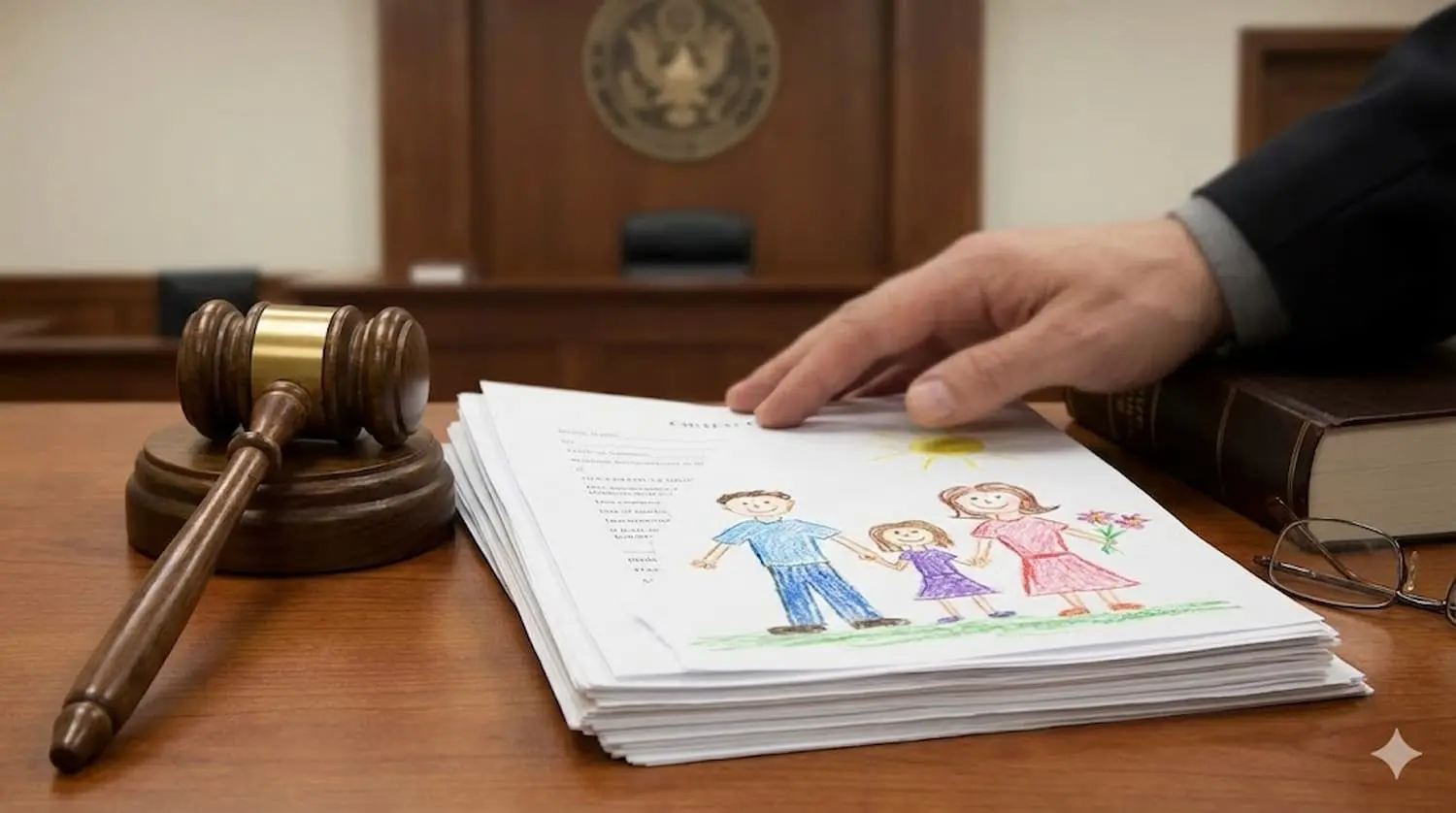
Protecting children
In short
Every decision is guided by the best interests of the child. When there is violence within the family, the judge may order:
Children who are mature enough have the right to be heard, with the safeguards needed to ensure the process does not cause them further harm.
No, while the parent is facing criminal proceedings for an attack on the other parent or the children, or when the judge finds well-founded indications of violence (article 92.7 of the Civil Code).
It is a public service where children are handed over and collected, or where supervised contact takes place, so that the parents do not have direct contact with each other.
Violence directed at the children or people close to a woman in order to hurt her. A specific bill has been going through the Spanish Parliament since July 2026.
Not in these cases. Article 156 of the Spanish Civil Code establishes that, if there is a conviction or criminal proceedings have been started against the other parent for attacking you or the children, your consent is enough for their psychological care, informing him beforehand. It also applies without a complaint if you are receiving support from a specialised gender-based violence service that certifies it with a report. Children over sixteen must give their express consent.
Yes. Spanish Organic Law 1/2004 includes minor children among the victims it provides assistance to (article 1.2), and its article 19.5 recognises the right to comprehensive social assistance for minors under your parental authority or custody, or living in environments where there is gender-based violence, with child psychology professionals. Ask about these services at social services or the victim support office.
Yes, in certain cases. Article 170 of the Spanish Civil Code allows parental authority to be removed by a judgment given in criminal or matrimonial proceedings, and articles 55 and 56 of the Spanish Criminal Code allow that removal to be imposed when the right is directly related to the offence. If the father kills the mother of his child, article 140 bis.2 requires him to be deprived of parental authority over that child.
Yes. Article 65 of Spanish Organic Law 1/2004 allows the judge to suspend the exercise of parental authority (patria potestad) or care and custody of the children who depend on a person accused of gender-based violence. If the judge does not suspend it, they must in any case decide how it will be exercised and adopt measures to guarantee the safety and recovery of the children and the mother. It can also be ordered on the basis of article 158 of the Spanish Civil Code.
Yes. Article 92.2 of the Spanish Civil Code requires the judge to ensure children’s right to be heard, and article 770.4.ª of the Spanish Civil Procedure Act establishes that, in contested proceedings, they must always be heard if they are twelve or older, and may be heard earlier if considered necessary. The hearing must take place in suitable conditions, without interference from other people.
Get advice before doing so. Article 154 of the Spanish Civil Code establishes that the children’s habitual residence can only be changed with the consent of both parents or with court authorisation, and article 225 bis of the Spanish Criminal Code punishes anyone who, without justification, moves the child without the other parent’s consent. If there is a risk, the right thing to do is to ask the judge urgently to authorise the move or adopt measures.
Yes, you can ask the judge. Article 158.3.º of the Spanish Civil Code allows measures to be ordered to prevent child abduction, such as a ban on leaving the country without prior court authorisation, a ban on issuing a passport to the child or its withdrawal, and making any change of address subject to court authorisation. Article 225 bis.3 of the Spanish Criminal Code aggravates child abduction when the child is taken out of Spain.
The law rejects it. Article 11.3 of Spanish Organic Law 8/2021, on the comprehensive protection of children and adolescents against violence, requires public authorities to prevent theoretical approaches or criteria without scientific backing that presume adult interference or manipulation, such as so-called parental alienation syndrome, from being taken into account. If something like this is raised in your proceedings, your lawyer can oppose it on the basis of this rule.
Yes. Article 92.4 of the Spanish Civil Code allows the judge to decide, in the children’s interest, that parental authority is exercised wholly or partly by only one of the parents. And if there are repeated disagreements or any reason that seriously hinders its exercise, article 156 allows it to be granted wholly or partly to one of them or its functions to be divided, for a period that can never exceed two years.
It should not happen. If they are under fourteen, article 449 ter of the Spanish Criminal Procedure Act (LECrim) requires their statement to be taken as pre-recorded evidence, always recorded and, if the judge so orders, through psychosocial teams, avoiding visual confrontation with the person under investigation. For minors under eighteen, article 707 allows them to testify at trial without visual confrontation, even by technical means, when necessary to avoid harm to them.

Parental authority (patria potestad) is the set of duties and powers over the children, such as looking after them, educating them, representing them or deciding their habitual residence, under article 154 of the Spanish Civil Code. Care and custody (guarda y custodia) is living with them day to day. They are separate decisions: article 92.4 allows parental authority to be exercised by both parents or by one alone, regardless of who has custody.
Yes. Article 92.9 of the Spanish Civil Code allows the judge, on their own initiative or at the request of the parties, the public prosecutor, the court’s technical team or the child, to obtain the opinion of qualified specialists on the suitability of how parental authority is exercised and the custody arrangements. In addition, article 92.6 requires the judge to request a report from the Public Prosecutor’s Office before deciding on custody arrangements.
Legal basis
Do you need help now?
On this page
Areas we cover
We handle gender-based violence cases throughout the province of Alicante, wherever you live and whichever court is handling your case. These are some of the towns where we work most often:
AlicanteElcheSan Vicente del RaspeigSant Joan d’AlacantEl CampelloMutxamelBenidormTorreviejaAlcoyDeniaCalpeAnd any other town in the province
Gender violence
Gender violence
Gender violence